

"Why did you almost not sign with us?" is the question most teams never ask, and the one that reshapes an offer fastest. B2B voice of customer research exists to collect answers like that at scale, in the buyer's own words, before they harden into churn. I learned that the hard way in 2014, early in Blue Ocean's history, when a churn review at a logistics software client showed that our happy-sponsor interviews had missed the real reason three accounts had left. Done well, the research tells you which parts of your offer buyers pay for, which parts they tolerate, and which parts they would happily drop.
What should a customer feedback program actually ask?
Forty: that is how many distinct sources of B2B value Harvard Business Review's Elements of Value research catalogs, running from table-stakes specification fit and acceptable price up through ease of doing business, individual career value, and shared purpose. A feedback program earns its budget when it tests against a catalog that wide rather than four or five attributes a team already tracks. The questions that matter most ask why buyers chose you, why they nearly chose someone else, what they would pay more for, and what they would drop without complaint. Satisfaction scores answer none of these. Value questions do, because they force a buyer to rank what your offer delivers.
Reading the full catalog before writing an interview guide keeps you from asking only about the handful of attributes you already track. It also gives your sales and product teams shared vocabulary for the moments they disagree about which value sources actually drive renewal.
Strong B2B voice of customer research also asks about the counterfactual. What did the buying group do before you? What would they do if the contract ended on Friday? Those two questions separate a service people like from a service people depend on, and the difference shows up in renewal behavior long before anyone files a complaint.
Customer interview questions worth stealing
- Walk me through the day you decided to look for a vendor. What broke?
- Who else sat in that room, and what did each of them worry about?
- What nearly stopped the deal, and who raised it first?
- Which part of the work do you describe to peers, and in what words?
- If this budget were cut, what part of the work would you protect?
Once you have the words buyers use, check them against demand using whatever keyword research tool your marketing team already runs. Matching search volume to the market's own phrasing shows what belongs on the page and what belongs in a sales conversation.
Which customers and stakeholders should you interview?
Five accounts per segment is the working minimum once a sample splits into wins, losses, churn, and expansions, and skipping that split is the most common reason B2B voice of customer research produces noise instead of decisions. Interview four groups: accounts that bought, accounts that chose a rival, accounts that left, and accounts that expanded. Inside each, talk to the economic buyer, the daily user, and the person who raised objections. A sponsor-only sample tells you what your champion believes, not what the committee decided.
Most B2B purchases run through a group, not a person, and the group rarely agrees. Gartner's B2B buying research has tracked how large those buying groups have become and how little of the cycle any single supplier gets. If your sample skips the skeptics, the findings will describe the deal you already won instead of the deals you keep losing. The companion piece on selling to a B2B buying committee covers how those roles divide.
| Group | What they explain best | Working minimum |
|---|---|---|
| Recent wins | Which value claims survived scrutiny | 5 accounts |
| Competitive losses | Where the offer reads as weaker or riskier | 5 accounts |
| Churned accounts | Which promises failed during delivery | 3 accounts |
| Expansion accounts | What made buying again the obvious move | 3 accounts |
| Non-sponsor stakeholders | The objections your champion softened | 2 per account |
B2B voice of customer research fails at recruitment more often than at analysis. Lost and churned accounts are the hardest to book and the most informative, so keep the ask small, name the interviewer, and promise no sales follow-up.
How B2B voice of customer research separates patterns from opinions
Three: that is the minimum number of independent accounts a theme needs to raise, unprompted, before it counts as a pattern instead of an opinion. Code every transcript against a fixed theme list, count how many independent accounts raise each theme unprompted, then weight the result by deal value and segment. One articulate complaint from a large account is still one opinion. A theme repeated unprompted across three or more unrelated accounts is a pattern you can act on. The same threshold also carries a quality bar: a pattern earns decision grade only when it surfaces without prompting and carries a verbatim quote you would be willing to read aloud to the person who owns that part of the business. Anything weaker goes on a watch list and waits for the next round.
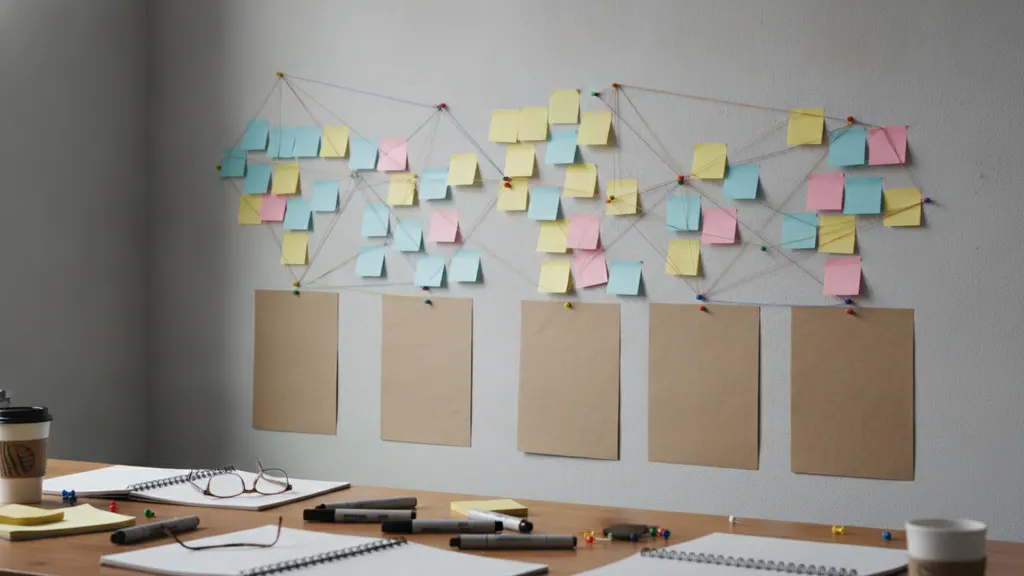
Volume alone misleads, because the loudest channel is rarely the most representative. Pair interview themes with the behavioral record: renewal dates, support tickets, and usage data your own service team already tracks. Then connect those themes to the churn signals described in our guide to B2B customer health scores.
Using B2B voice of customer research to sharpen positioning, packaging, and delivery
Eighty percent: that is the share of customers who told Salesforce's State of the Connected Customer research that the experience a company provides matters as much as its products or services. Findings become money in three places: the words in your positioning, the shape of your packages, and the promises made during delivery. Positioning borrows the buyer's language. Packaging follows what buyers already bundle in their heads. Delivery closes the gap between the promise that sold the deal and the experience that renews it.
Experience is not a soft addition to the product story. When interviews say the work is good but the process is painful, you are looking at a positioning problem and a delivery problem at the same time.
Packaging pays back fastest. If three segments describe the same first ninety days in the same terms, that is a package rather than a custom scope, and our guide to B2B service packaging walks through the structure.
Positioning claims should be tested against what buyers say rivals do well, not against what your team assumes. Forrester's customer experience research practice publishes continuing work on how buyers evaluate suppliers, and the same logic drives the argument in B2B differentiation strategy: a claim nobody else can honestly make is worth more than a claim everybody makes louder.
How do you turn customer feedback into operating decisions?
Ninety days is the review cadence that keeps a theme list honest: short enough that evidence stays fresh, long enough that a team is deciding on patterns and not single anecdotes. Research that ends in a slide deck changes nothing. Every confirmed theme needs one owner, one dated decision, and one measurable change in the funnel, the package, or the delivery runbook. Review the list on a fixed cadence so themes get resolved, get rejected with a stated reason, or stay visible.
The payoff is not only commercial warmth. McKinsey's growth, marketing, and sales research links customer experience improvement with stronger revenue performance and lower cost to serve, because the friction that annoys buyers also creates rework, escalations, and discounting on your side of the contract.
Map each theme to the stage where it bites. A pricing objection raised in month two of delivery is a proposal problem rather than a billing problem, and B2B customer journey mapping is the fastest way to place it correctly.
Then set the rhythm. Twice-yearly B2B voice of customer research keeps the picture current without exhausting goodwill, with short pulse interviews after every loss and every churn in between. Track category context alongside it using your own market-sizing data, so you can tell a company problem from a market shift.
Frequently asked questions
What is B2B voice of customer research, in plain terms?
B2B voice of customer research is a structured way of collecting what buyers, users, and former clients say about your offer, then turning those words into decisions about positioning, packaging, and delivery. It is not a satisfaction survey. The unit of analysis is the source of value a customer pays for, which is why many teams build their question set from Harvard Business Review's B2B Elements of Value research and its catalog of 40 distinct value sources. Interviews run 30 to 45 minutes, transcripts get coded against a fixed theme list, and themes with enough independent support become dated decisions with named owners.
How many customer interviews do I need before the findings mean anything?
Fewer than most teams expect, as long as the sample is spread properly. Themes usually start repeating after the first handful of interviews inside a single segment, and each new segment resets the count. The risk is not sample size but sample shape: ten happy sponsors will agree with each other and teach you nothing about the deals you lose. Book wins, losses, churn, and expansions separately. Weight the result by revenue and segment, not by how articulate the speaker was. For context on how many people now sit in a buying group, Gartner's B2B buying research is the standard reference.
What customer interview questions actually produce useful answers?
Questions about specific past events, not opinions about the future. Ask what broke on the day they started looking, who objected and why, what nearly stopped the purchase, and what they would protect if the budget were cut. Then ask them to describe the work in their own words, and write those words down exactly as spoken. Abstract questions produce abstract answers that flatter everyone in the room. Grounding the guide in a published value framework helps as well: Harvard Business Review's research on B2B value gives you categories to probe rather than a feature list to defend.
Should I use surveys or interviews for B2B customer feedback?
Both, in that order of importance. Interviews surface language, causes, and the objections nobody writes down. Surveys confirm how widely a theme holds once you know what to ask. Running the survey first usually locks in your own assumptions, because you can only ask about what you already suspect. In B2B, where account counts are small and deal sizes are large, twenty conversations often beat two hundred responses. Service and feedback programs built this way work best when the quantitative layer tests questions that interviews already raised, which lines up with how Forrester's customer experience research describes the handoff between qualitative and quantitative work.
Who should run the interviews: sales, marketing, or an outside interviewer?
Not the account owner. Customers soften criticism in front of the person who sold them the work, so the account owner hears confirmation instead of information. A researcher from another team, or an outside interviewer, gets closer to the truth and can ask the uncomfortable follow-up question. Sales should read the transcripts rather than run the calls. Whoever runs it needs one skill above the rest: staying quiet after the answer, because the second half of a response usually carries the real reason. Forrester's customer experience research is a useful model for separating collection from ownership.
How often should we repeat B2B voice of customer research?
B2B voice of customer research works best as a rhythm rather than a project. Run a full round twice a year, and add pulse interviews after every loss, every churn, and every major expansion while the reasons are still fresh. A full round every quarter burns goodwill and returns the same answers. Once a year lets a problem run for eleven months. Keep a standing theme list between rounds so new evidence lands against existing patterns instead of starting over. Reviewing open themes every ninety days keeps the program tied to the revenue and cost-to-serve gains described in McKinsey's growth and marketing research.